
The Leadership Mirror: What Your Team's Behavior Is Really Telling You
Before you diagnose your team, look in the mirror. The patterns you see in your people are often a direct reflection of the culture you have created — whether you intended to or not.
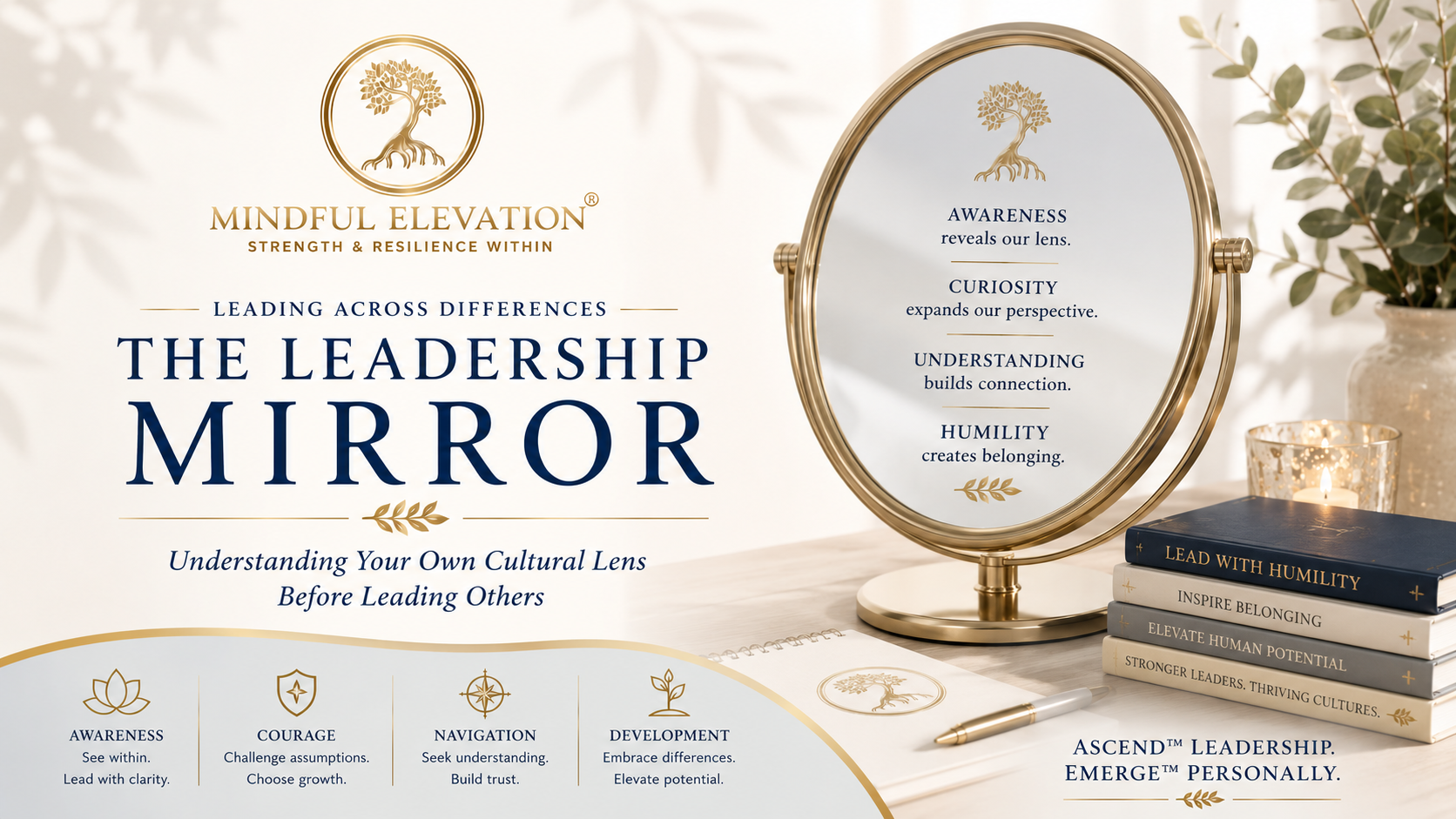
Every leader eventually reaches a moment when they look at their team and wonder what went wrong. The disengagement, the conflict, the quiet quitting, the performance gaps — these feel like team problems. But the most honest leaders know that what they are seeing in their team is often a reflection of what they have been modeling, tolerating, or inadvertently rewarding.
The Leadership Mirror is not a comfortable concept. It asks leaders to consider that the culture they are experiencing is, in large part, the culture they created. Not through malice, but through the accumulated weight of their daily choices — what they respond to, what they ignore, what they celebrate, and what they allow.
When a team is conflict-avoidant, it is worth asking whether the leader has modeled the ability to navigate difficult conversations with grace. When a team lacks initiative, it is worth examining whether the leader has created the psychological safety that makes risk-taking feel possible. When a team is siloed, it is worth considering whether the leader has built the relational bridges that make collaboration feel worthwhile.
None of this is about blame. It is about responsibility — the kind of responsibility that actually has the power to change things. A leader who understands that their behavior shapes their team's behavior has access to a lever that no performance management system can replicate.
The mirror practice begins with observation. What patterns do you see in your team? What behaviors show up consistently? What is the emotional temperature of your team meetings, your one-on-ones, your hallway conversations? These are data points, not judgments.
Then comes the harder question: where did these patterns come from? What have you been modeling? What have you been tolerating? What have you been rewarding, even unintentionally? The answers are rarely comfortable, but they are almost always instructive.
The leaders who build the strongest teams are not the ones who never make mistakes. They are the ones who are willing to look honestly at the impact of their leadership and make different choices. The mirror is not a verdict. It is an invitation.

Jacqueline Nelms, DHSc
Healthcare executive, behavioral scientist, and founder of Mindful Elevation® — exploring how people and organizations sustain exceptional performance.
About JacquelineMore from the Library
View all articlesLeadership Legacy: The Question Every Leader Should Be Asking
Legacy is not something that happens after you leave. It is being built right now, in every interaction, every decision, and every choice about what kind of leader you are going to be today.
Read article Self-AwarenessYour Team Is Watching: The Leadership Behaviors That Shape Culture
Culture is not what you put on the wall. It is what your team observes you doing when the stakes are high, when no one is watching, and when it would be easier to look the other way.
Read article Self-AwarenessThe Leadership Cost of Disconnection: What Happens When Leaders Stop Listening
Disconnected leadership is one of the most expensive problems in organizations — and one of the least visible. By the time the cost becomes apparent, the damage to trust, culture, and performance is already significant.
Read article