Beyond 'How's the Work Going': The Leadership Power of the Human Check-In
Most leader check-ins are really work status updates in disguise. The leaders who build the deepest trust and the most resilient teams are the ones who learned to ask a different question — and to actually listen to the answer.
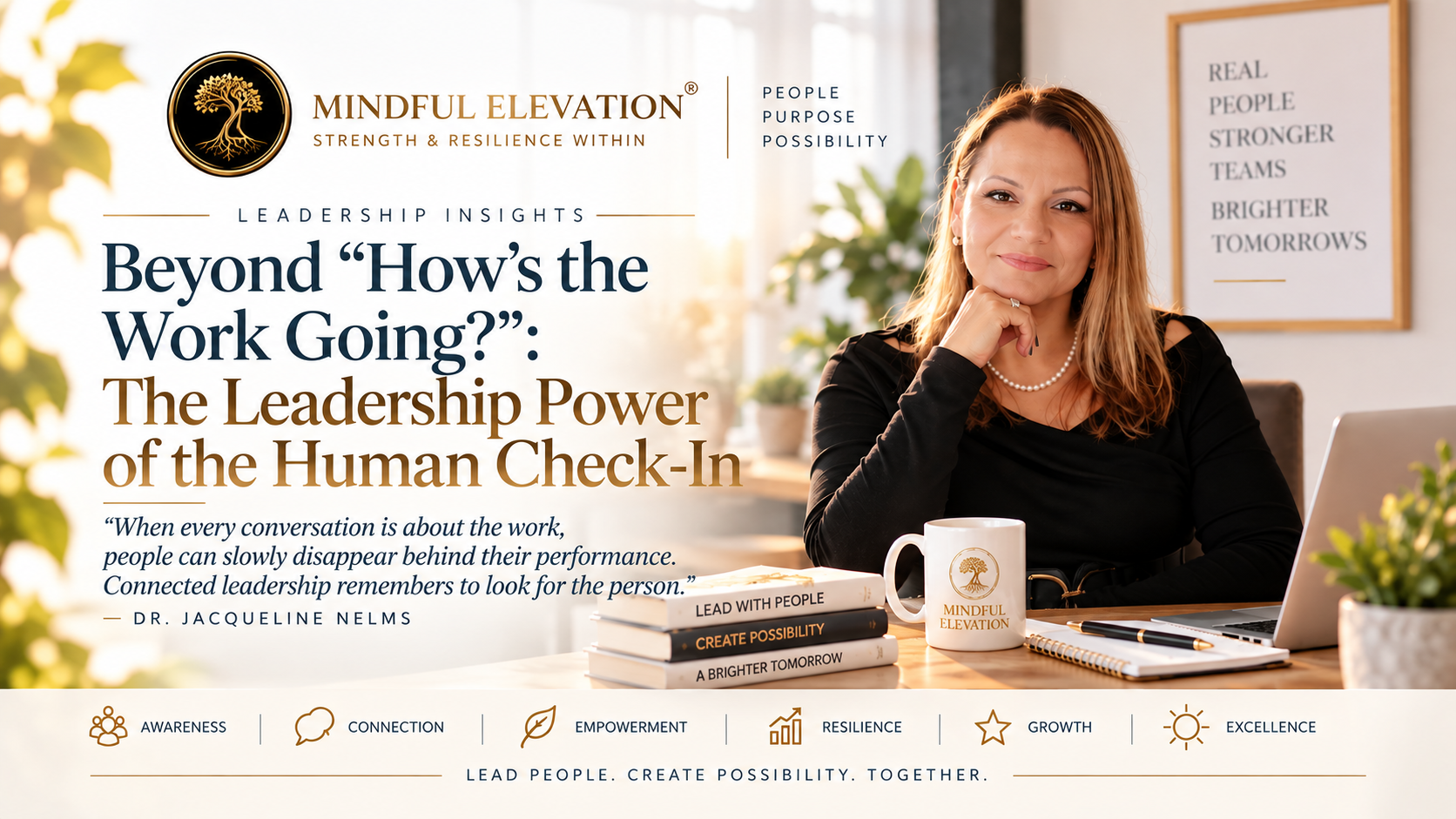
The standard leader check-in follows a predictable script. How is the project going? Are you on track? What do you need from me? These are useful questions. But they are questions about work, not about people. And when work is the only thing a leader ever asks about, the message — however unintentional — is that the person only matters insofar as they produce.
The most powerful question a leader can ask is not about the work. It is about the person doing it. How are you doing, not the project, not the deliverable, but you? What is weighing on you right now? What do you need that you have not asked for? These questions are simple. They are also rare. And their rarity is precisely what makes them so powerful when a leader asks them with genuine intent.
The human check-in is a leadership practice built on a foundational insight: people do not leave their humanity at the door when they come to work. They bring their full selves, their stress, their uncertainty, their hope, their exhaustion, their need to be seen. Leaders who acknowledge that humanity, who make space for it rather than working around it, build a fundamentally different kind of relationship with their teams.
The return on investment for the human check-in is significant. People who feel genuinely seen and heard by their leaders are more engaged, more willing to bring problems forward before they become crises, and more likely to stay. The relational trust that is built through consistent human check-ins is one of the most powerful retention and performance tools available to leaders.
It also requires safety. People will answer the question honestly only if they trust that honesty is welcome. The leader who asks, 'How are you really doing?' and then visibly checks out when the answer is complicated has not built a human check-in practice. They have built a performance of one. Real human check-ins require the relational safety that comes from consistency, from being the kind of leader who asks and actually wants to know.

Jacqueline Nelms, DHSc
Healthcare executive, behavioral scientist, and founder of Mindful Elevation® — exploring how people and organizations sustain exceptional performance.
About JacquelineMore from the Library
View all articlesThe Invisible Employee Experience: What Leaders Miss When They Only Measure Engagement
Engagement scores tell you whether people are showing up. They do not tell you what it costs them to do so. The most important parts of the employee experience are often the ones that never make it onto a survey.
Read article Inclusive LeadershipPsychologically Safe Leadership: What It Actually Takes to Build Trust
Psychological safety is one of the most cited concepts in organizational research. It is also one of the most misunderstood. It is not about being nice. It is about creating the conditions where honest, courageous work is possible.
Read article Inclusive LeadershipThe Hidden Cost of Cultural Blind Spots in Leadership
Every leader has blind spots. The ones that are most costly are the cultural ones — the assumptions about how people work, what they need, and what good leadership looks like that go unexamined because they feel like common sense.
Read article