
Psychologically Safe Leadership: What It Actually Takes to Build Trust
Psychological safety is one of the most cited concepts in organizational research. It is also one of the most misunderstood. It is not about being nice. It is about creating the conditions where honest, courageous work is possible.
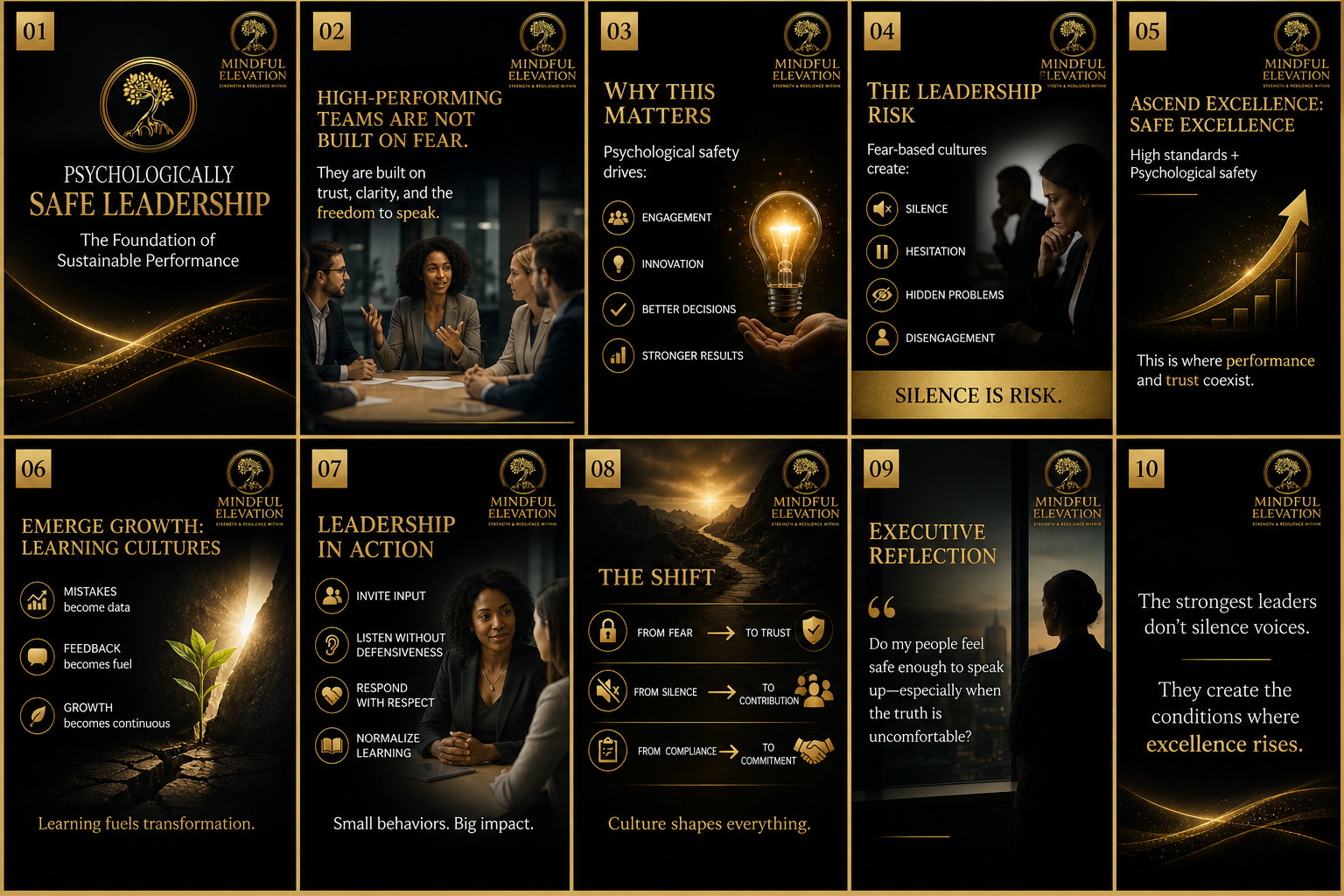
Google's Project Aristotle found that psychological safety was the single most important factor in team effectiveness. Since then, the concept has become a staple of leadership development conversations. But in many organizations, it has been reduced to a vague aspiration — something leaders say they want without a clear understanding of what it actually requires.
Psychological safety is not about making people comfortable. It is about making honesty possible. It is the belief that you can speak up, ask questions, admit mistakes, and challenge assumptions without fear of humiliation, retaliation, or exclusion. That belief is built through consistent leader behavior over time — and it is destroyed in a single moment of dismissal, ridicule, or punishment.
Building psychological safety requires leaders to do several things consistently. To respond to mistakes with curiosity rather than blame. To model vulnerability by acknowledging their own uncertainty and limitations. To actively invite dissent and reward the people who bring difficult truths. To follow through on what they say they value.
It also requires leaders to examine the power dynamics in their teams. Psychological safety is not equally distributed. People who hold less power — because of their role, their identity, or their history in the organization — often experience less safety, even in teams where the leader believes safety is high. Building genuine safety requires attending to those dynamics, not just assuming they do not exist.
The return on investment for psychological safety is significant. Teams with high psychological safety learn faster, innovate more, and perform better over time. They surface problems before they become crises. They retain their best people. They build the kind of trust that makes sustained high performance possible.
Psychological safety is not a program or an initiative. It is a daily practice. It is built in the small moments — the way you respond to a question, the way you handle a mistake, the way you show up when the stakes are high. And it is worth every bit of the investment it requires.

Jacqueline Nelms, DHSc
Healthcare executive, behavioral scientist, and founder of Mindful Elevation® — exploring how people and organizations sustain exceptional performance.
About JacquelineMore from the Library
View all articlesThe Invisible Employee Experience: What Leaders Miss When They Only Measure Engagement
Engagement scores tell you whether people are showing up. They do not tell you what it costs them to do so. The most important parts of the employee experience are often the ones that never make it onto a survey.
Read article Inclusive LeadershipThe Hidden Cost of Cultural Blind Spots in Leadership
Every leader has blind spots. The ones that are most costly are the cultural ones — the assumptions about how people work, what they need, and what good leadership looks like that go unexamined because they feel like common sense.
Read article Inclusive LeadershipBelonging Is Built Through Everyday Leadership
Belonging is not a program or an initiative. It is the cumulative result of thousands of small leadership choices — who gets heard, who gets developed, who gets the benefit of the doubt, and who does not.
Read article