
The Invisible Employee Experience: What Leaders Miss When They Only Measure Engagement
Engagement scores tell you whether people are showing up. They do not tell you what it costs them to do so. The most important parts of the employee experience are often the ones that never make it onto a survey.
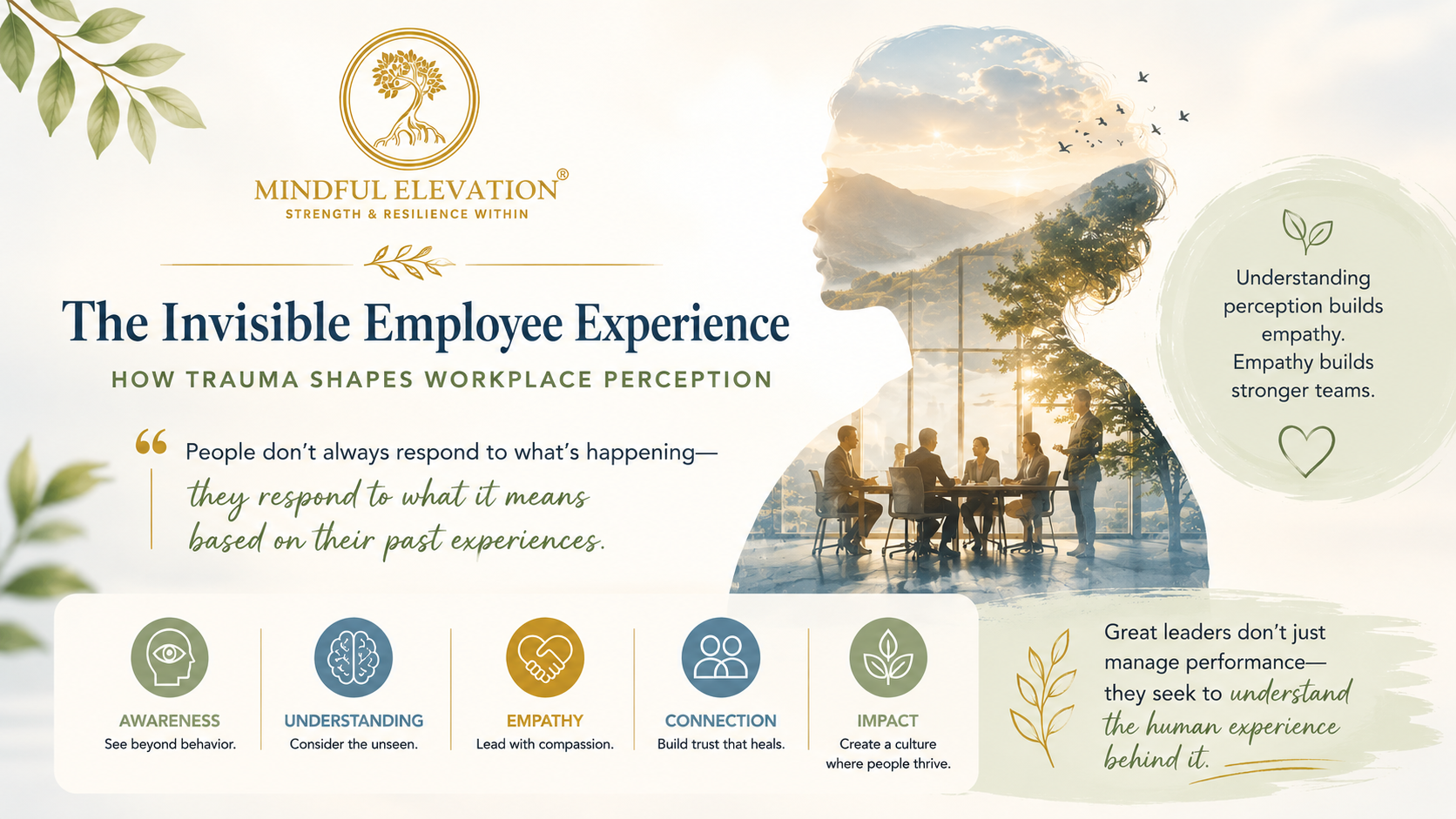
Most organizations measure employee engagement. They run annual surveys, track participation rates, and benchmark their scores against industry averages. And when the scores come back acceptable, they conclude that things are fine. But engagement scores measure behavior — whether people are showing up, participating, and performing. They do not measure what it costs people to do those things.
The invisible employee experience is the gap between what people show and what they feel. It is the exhaustion that gets masked by professionalism. The belonging that is performed rather than felt. The psychological labor of navigating a culture that was not designed with you in mind. These experiences do not show up in engagement data. But they shape retention, performance, and culture in ways that eventually do.
Leaders who want to understand the real employee experience need to go beyond surveys. They need to build the relational trust that makes honest conversation possible. They need to ask different questions — not just 'how is the work going?' but 'what is it like to work here for you?' They need to listen for what is not being said as much as what is.
They also need to examine the structural conditions that create invisible burden. Who has to work harder to be taken seriously? Who has to manage their identity in addition to their workload? Who is doing the emotional labor of making others comfortable while their own discomfort goes unaddressed? These are not soft questions. They are strategic ones.
The leaders who build the most inclusive and sustainable cultures are the ones who are willing to look at the full picture of the employee experience — not just the parts that are easy to measure, but the parts that are easy to miss. Because what gets ignored does not disappear. It accumulates. And eventually, it walks out the door.

Jacqueline Nelms, DHSc
Healthcare executive, behavioral scientist, and founder of Mindful Elevation® — exploring how people and organizations sustain exceptional performance.
About JacquelineMore from the Library
View all articlesPsychologically Safe Leadership: What It Actually Takes to Build Trust
Psychological safety is one of the most cited concepts in organizational research. It is also one of the most misunderstood. It is not about being nice. It is about creating the conditions where honest, courageous work is possible.
Read article Inclusive LeadershipThe Hidden Cost of Cultural Blind Spots in Leadership
Every leader has blind spots. The ones that are most costly are the cultural ones — the assumptions about how people work, what they need, and what good leadership looks like that go unexamined because they feel like common sense.
Read article Inclusive LeadershipBelonging Is Built Through Everyday Leadership
Belonging is not a program or an initiative. It is the cumulative result of thousands of small leadership choices — who gets heard, who gets developed, who gets the benefit of the doubt, and who does not.
Read article