Emotional Sustainability: The Leadership Practice No One Talks About
We talk endlessly about sustainable energy and sustainable business practices. But we rarely talk about the emotional sustainability of the people doing the leading. That silence is costing us more than we know.
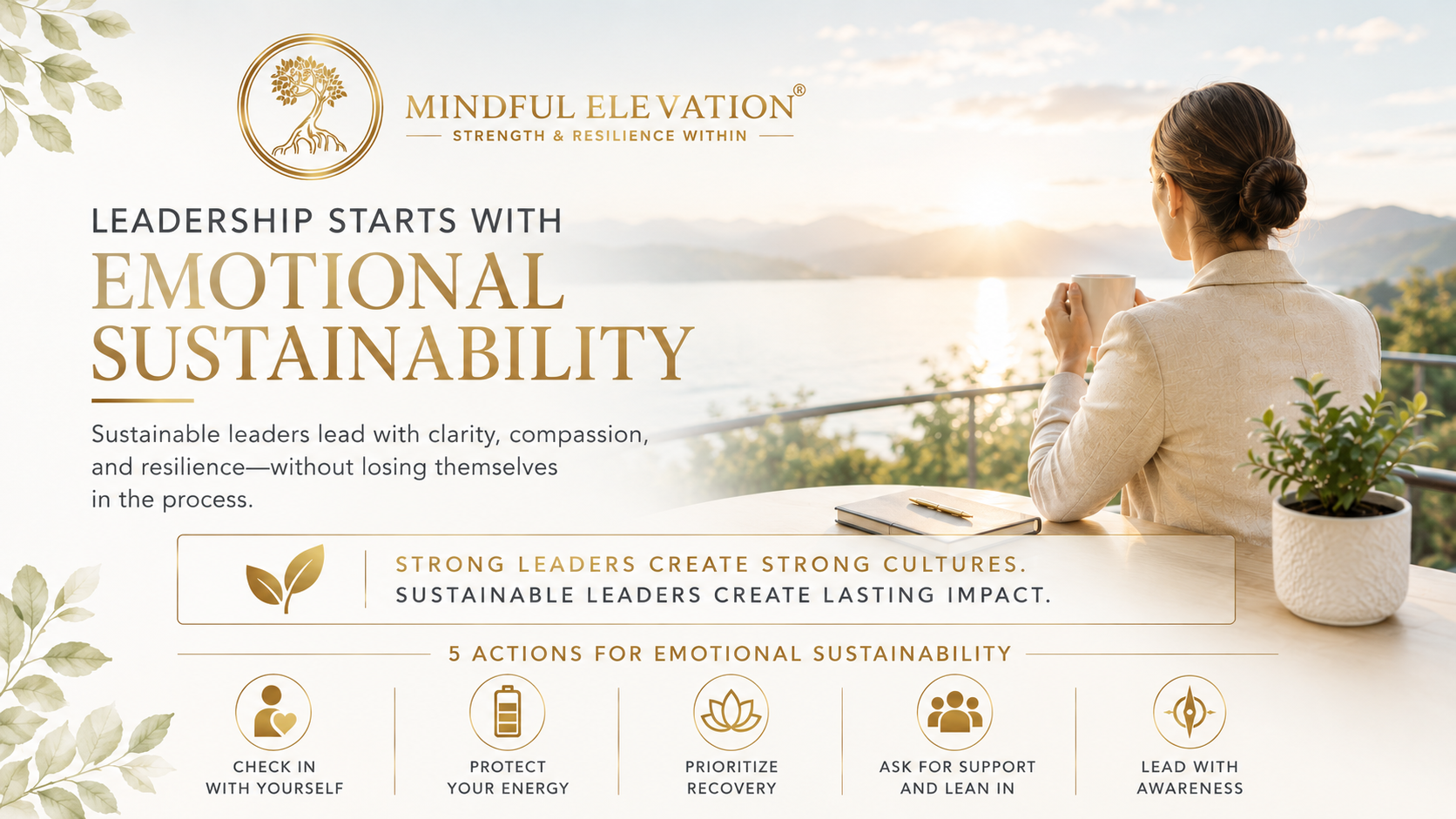
Leadership is an emotionally demanding practice. It requires the capacity to hold other people's anxiety without absorbing it, to navigate conflict without escalating it, to make hard decisions without losing your humanity, and to show up consistently for your team even when you are struggling yourself. That is an enormous emotional load — and most leaders carry it without any real support structure.
Emotional sustainability is the capacity to lead over time without depleting the internal resources that make good leadership possible. It is not about being emotionally flat or invulnerable. It is about having the practices, the relationships, and the self-awareness to replenish what leadership takes from you.
Most leadership development programs focus on skills — communication, strategy, decision-making, influence. These are important. But they are built on a foundation that is rarely examined: the emotional health of the leader. A leader who is emotionally depleted will struggle to use their skills effectively, no matter how well-developed those skills are.
Emotional sustainability requires leaders to take their own inner life seriously. To notice when they are running on empty. To understand what replenishes them and to protect those practices with the same discipline they bring to their professional commitments. To build relationships — with peers, mentors, coaches — where they can be honest about the difficulty of leading.
It also requires organizations to stop treating leader wellbeing as a personal responsibility and start treating it as an organizational priority. The emotional health of leaders shapes the emotional health of teams. An organization that invests in the sustainability of its leaders is investing in the sustainability of its culture.
The leaders who last — who lead well over the long arc of a career — are not the ones who are immune to difficulty. They are the ones who have built the internal and relational infrastructure to navigate difficulty without being destroyed by it. That is not a personality trait. It is a practice. And it can be developed.

Jacqueline Nelms, DHSc
Healthcare executive, behavioral scientist, and founder of Mindful Elevation® — exploring how people and organizations sustain exceptional performance.
About JacquelineMore from the Library
View all articlesWhen High Performers Are Hurting: The Hidden Cost of Excellence Without Support
High performers are often the last people anyone worries about. They deliver, they adapt, they push through. But beneath the excellence, many are running on empty — and the cost of ignoring that is higher than most organizations realize.
Read article Leader WellbeingSustainable Leadership Energy: How to Lead Without Running Yourself Into the Ground
The most effective leaders are not the ones who work the hardest. They are the ones who have learned to manage their energy as deliberately as they manage their time — and to protect the practices that keep them at their best.
Read article Leader WellbeingThe Leadership Capacity Audit: What Is Draining the Leader in You?
Before you can lead sustainably, you need to understand what is draining you. The Leadership Capacity Audit is a framework for identifying the hidden costs of your current leadership practice — and reclaiming the energy you need to lead well.
Read article