Sustainable Leadership Energy: How to Lead Without Running Yourself Into the Ground
The most effective leaders are not the ones who work the hardest. They are the ones who have learned to manage their energy as deliberately as they manage their time — and to protect the practices that keep them at their best.
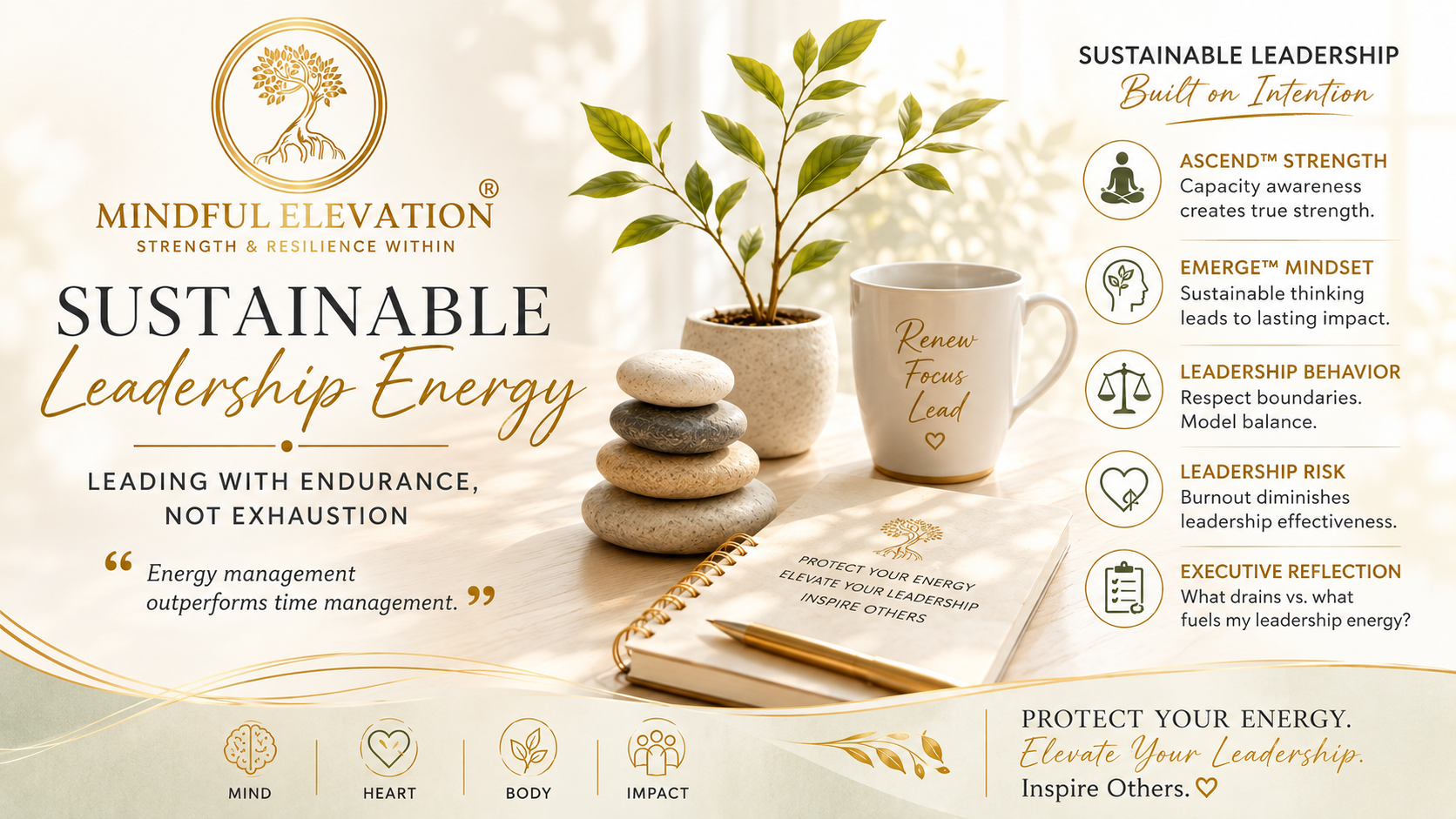
Sustainable leadership is not about doing less. It is not about lowering standards, reducing ambition, or stepping back from the demands of the work. It is about leading from a place of genuine capacity, understanding what fuels your ability to perform at your best and building the practices that protect and replenish that capacity over time.
Sustainable leadership energy is not about working less. It is about working in a way that is actually sustainable — that does not deplete the physical, emotional, and cognitive resources that effective leadership requires. It is about understanding that your energy is a finite resource that needs to be managed as deliberately as your time.
Leadership energy operates across five dimensions. The first is mind, the cognitive capacity for clear thinking, strategic judgment, and creative problem-solving. Mental energy is depleted by chronic overload, decision fatigue, and the absence of space for reflection. It is restored by focused work, adequate sleep, and the deliberate practice of stepping back from the noise to think.
The second is heart, the emotional capacity for empathy, connection, and the relational work that leadership requires. Emotional energy is depleted by unresolved conflict, chronic stress, and the suppression of one's own emotional experience. It is restored by genuine connection, meaningful relationships, and the practice of processing rather than accumulating emotional weight.
The third is the body, the physical foundation on which everything else rests. Physical energy is depleted by poor sleep, inadequate movement, and the chronic activation of the stress response. It is restored by the basics: sleep, movement, nutrition, and the recognition that the body is not separate from the leader's capacity to perform.
The fourth is impact, the sense of meaning and purpose that sustains motivation over time. Purpose energy is depleted when leaders lose sight of why the work matters, when they feel disconnected from their values, or when the demands of the role crowd out the work that gives them meaning. It is restored by reconnecting with purpose, celebrating progress, and remembering what the work is ultimately for.

Jacqueline Nelms, DHSc
Healthcare executive, behavioral scientist, and founder of Mindful Elevation® — exploring how people and organizations sustain exceptional performance.
About JacquelineMore from the Library
View all articlesWhen High Performers Are Hurting: The Hidden Cost of Excellence Without Support
High performers are often the last people anyone worries about. They deliver, they adapt, they push through. But beneath the excellence, many are running on empty — and the cost of ignoring that is higher than most organizations realize.
Read article Leader WellbeingEmotional Sustainability: The Leadership Practice No One Talks About
We talk endlessly about sustainable energy and sustainable business practices. But we rarely talk about the emotional sustainability of the people doing the leading. That silence is costing us more than we know.
Read article Leader WellbeingThe Leadership Capacity Audit: What Is Draining the Leader in You?
Before you can lead sustainably, you need to understand what is draining you. The Leadership Capacity Audit is a framework for identifying the hidden costs of your current leadership practice — and reclaiming the energy you need to lead well.
Read article