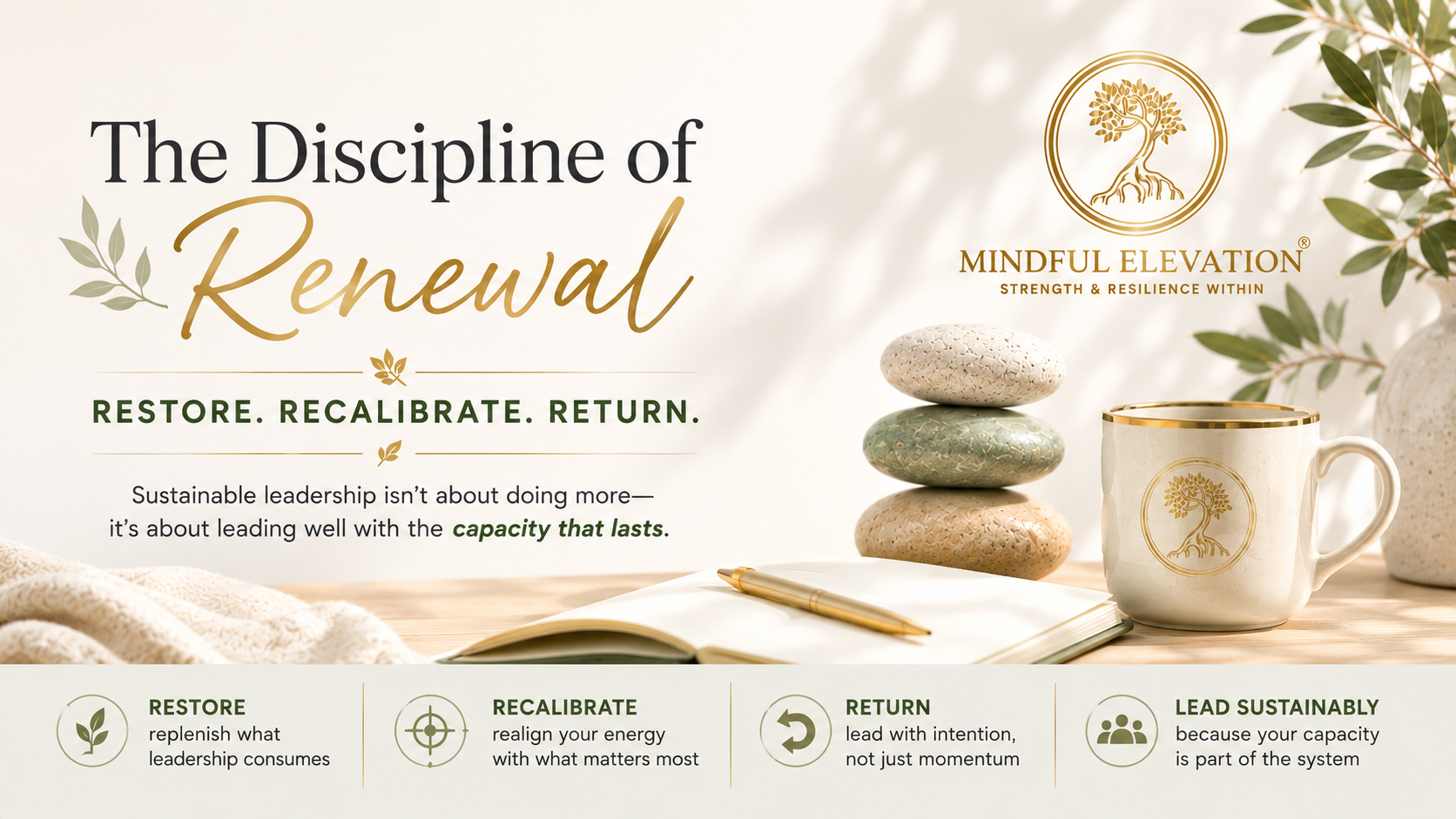
The Discipline of Renewal: Why Rest Is a Leadership Strategy
Rest is not the absence of leadership. It is the practice that makes sustained leadership possible. The leaders who last are the ones who learned to treat renewal not as a reward for hard work, but as a requirement for it.
Culture is not what you say. It is what you do. And your team is watching, not just in the formal moments of leadership, but in the small, unguarded moments that reveal what you actually believe, what you actually value, and what you actually expect.
Every behavior a leader models sends a message. When a leader sends emails at midnight, the message is that availability is expected. When a leader cancels one-on-ones but never misses an executive meeting, the message is that people are less important than performance. When a leader responds to a mistake with blame rather than curiosity, the message is that this is not a safe place to fail. These messages are received, interpreted, and acted upon, often without a single explicit conversation.
The research on performance and recovery is unambiguous. Elite performers in every domain — athletes, musicians, surgeons — do not sustain peak performance through continuous effort. They sustain it through deliberate cycles of effort and recovery. Leadership is no different. The leaders who perform at the highest level over the longest period of time are the ones who have learned to manage their recovery as deliberately as they manage their work.
The inverse is equally true. When a leader protects their boundaries, leaves at a reasonable hour, takes their vacation, and acknowledges when they are overwhelmed, they give their team permission to do the same. When a leader responds to a mistake with curiosity and support, they create a culture where people are willing to take risks and admit errors before they become crises. When a leader consistently makes time for the people on their team, they signal that people matter here.
Leadership behavior is the most powerful culture-shaping force in any organization. More powerful than strategy. More powerful than structure. More powerful than any program or initiative. Because culture is not built in the boardroom. It is built in the daily, observable behavior of the people with the most influence, and the people with the most influence are watching themselves least carefully.

Jacqueline Nelms, DHSc
Healthcare executive, behavioral scientist, and founder of Mindful Elevation® — exploring how people and organizations sustain exceptional performance.
About JacquelineMore from the Library
View all articlesWhen High Performers Are Hurting: The Hidden Cost of Excellence Without Support
High performers are often the last people anyone worries about. They deliver, they adapt, they push through. But beneath the excellence, many are running on empty — and the cost of ignoring that is higher than most organizations realize.
Read article Leader WellbeingEmotional Sustainability: The Leadership Practice No One Talks About
We talk endlessly about sustainable energy and sustainable business practices. But we rarely talk about the emotional sustainability of the people doing the leading. That silence is costing us more than we know.
Read article Leader WellbeingSustainable Leadership Energy: How to Lead Without Running Yourself Into the Ground
The most effective leaders are not the ones who work the hardest. They are the ones who have learned to manage their energy as deliberately as they manage their time — and to protect the practices that keep them at their best.
Read article