
The Leader as Regulator: How Your Nervous System Shapes Your Team's Culture
Your team is not just watching what you say. They are reading your nervous system. The emotional state you bring into the room shapes the emotional state of everyone in it — and that has everything to do with the culture you are building.
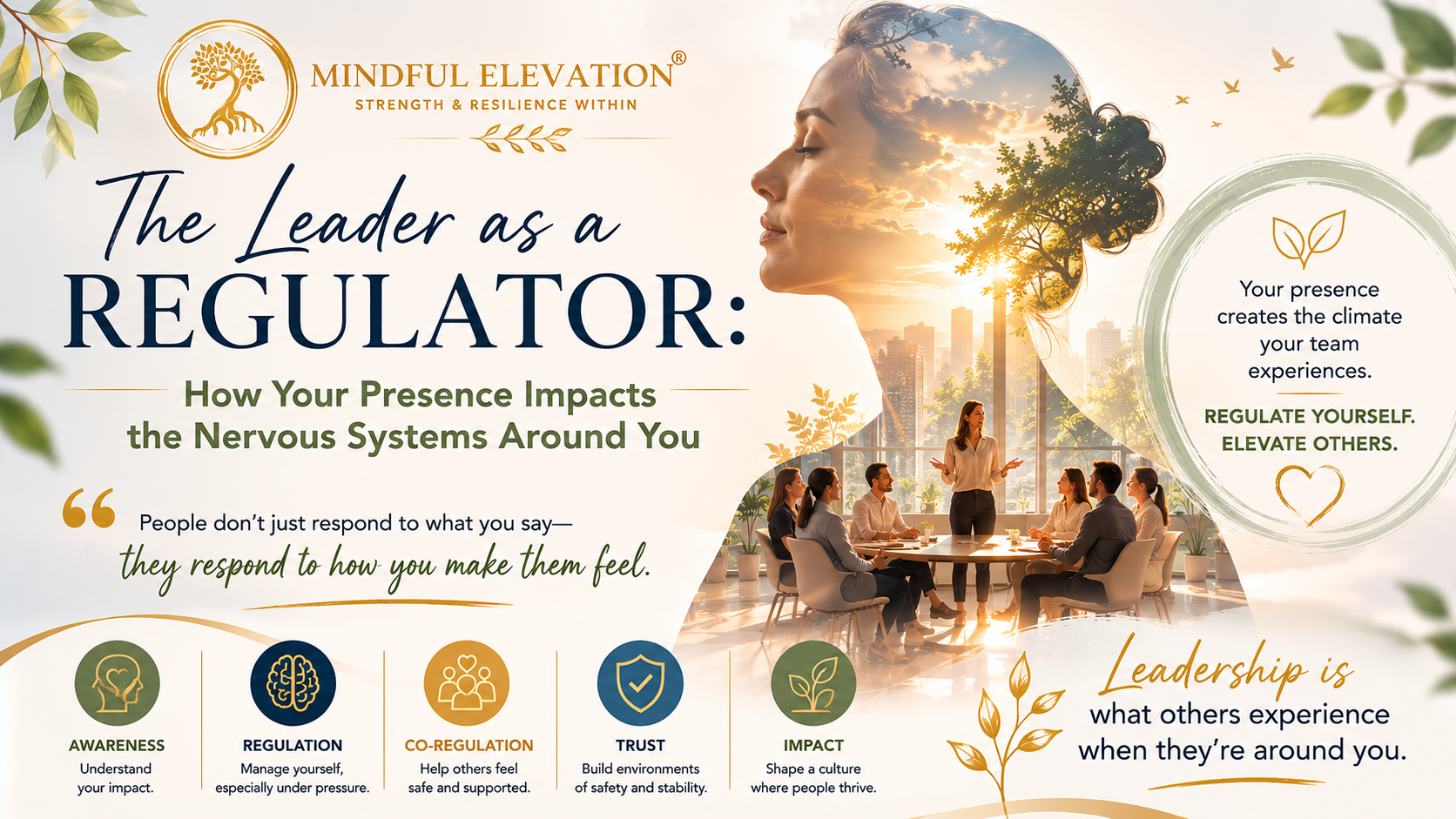
There is a concept in neuroscience called co-regulation — the process by which one person's nervous system influences another's. It is the reason a calm presence can settle a room, and an anxious one can unsettle it. It is the reason your team can feel your stress before you say a word. And it is one of the most underappreciated dynamics in organizational leadership.
Leaders are, whether they know it or not, nervous system regulators. The emotional state they bring into a meeting, a one-on-one, or a difficult conversation does not stay with them. It spreads. It shapes the emotional temperature of the room, the quality of the thinking that happens there, and the culture that accumulates over time.
This is not about performing calm or suppressing authentic emotion. It is about developing the self-awareness and the regulatory capacity to choose how you show up — especially under pressure. It is about understanding that your internal state is not just a personal matter. It is a leadership variable.
Leaders who are chronically dysregulated — who bring anxiety, reactivity, or emotional volatility into their teams — create cultures of hypervigilance. Their teams spend cognitive and emotional energy managing the leader's state rather than doing their best work. Over time, this erodes trust, creativity, and psychological safety.
Leaders who develop regulatory capacity — who can stay grounded under pressure, who can hold space for difficulty without being destabilized by it — create cultures of safety. Their teams can take risks, ask questions, and bring problems forward without fear of an unpredictable response.
Developing regulatory capacity is not about becoming emotionless. It is about building the internal resources — through practice, reflection, and support — to navigate the emotional demands of leadership without passing those demands on to your team. It is one of the most important investments a leader can make in their own development and in the health of their culture.

Jacqueline Nelms, DHSc
Healthcare executive, behavioral scientist, and founder of Mindful Elevation® — exploring how people and organizations sustain exceptional performance.
About JacquelineMore from the Library
View all articlesTrauma-Informed Leadership Is Not About Trauma — It's About Human Potential
When leaders hear the phrase 'trauma-informed,' they often assume it means therapy or crisis intervention. It doesn't. It means understanding how human beings actually work — and leading in a way that makes people's best thinking and best work possible.
Read article Trauma-Informed LeadershipTrauma-Informed Leadership: Building Organizations Where People Can Actually Thrive
Trauma-informed leadership is not a clinical framework imported into the workplace. It is a fundamentally different way of understanding what people need to do their best work — and what leaders need to do to create those conditions.
Read article Self-AwarenessThe Leadership Mirror: What Your Team's Behavior Is Really Telling You
Before you diagnose your team, look in the mirror. The patterns you see in your people are often a direct reflection of the culture you have created — whether you intended to or not.
Read article