
Trauma-Informed Leadership: Building Organizations Where People Can Actually Thrive
Trauma-informed leadership is not a clinical framework imported into the workplace. It is a fundamentally different way of understanding what people need to do their best work — and what leaders need to do to create those conditions.
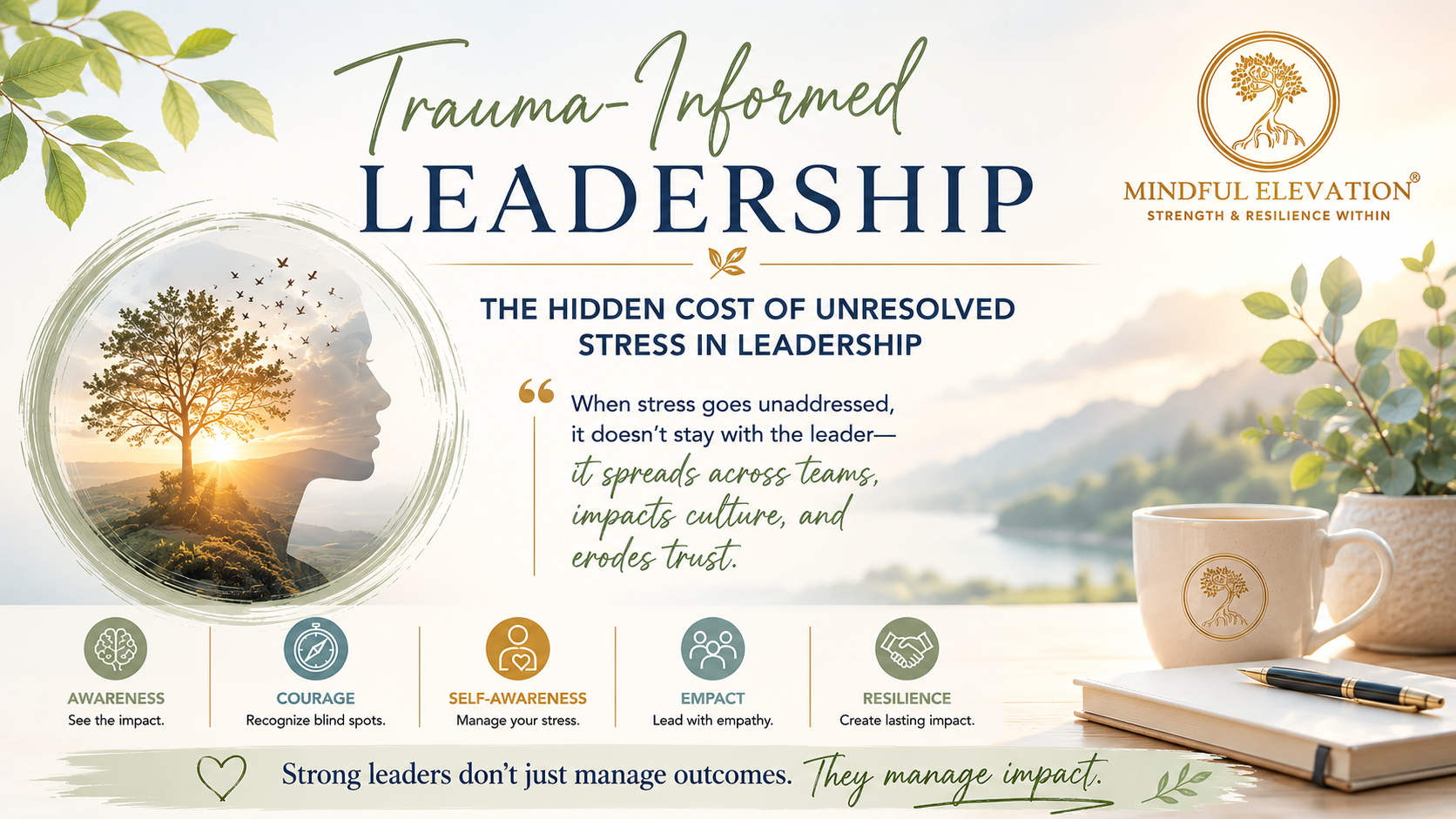
The research on trauma and its impact on human functioning is unambiguous: adverse experiences shape the nervous system in ways that affect how people think, relate, and perform — often long after the original experience has passed. This is not a fringe finding. It is one of the most replicated findings in behavioral science. And it has profound implications for how we lead organizations.
Trauma-informed leadership begins with a recognition that the people in our organizations are whole human beings who bring their full history with them to work. Not because we need to know that history, but because we need to understand that behavior that looks like resistance, disengagement, or underperformance is often a nervous system response to an environment that does not feel safe.
The five principles of trauma-informed practice — safety, trustworthiness, choice, collaboration, and empowerment — translate directly into leadership behaviors. Creating psychological safety. Being transparent and consistent. Giving people agency over their work. Building genuine partnership rather than top-down control. Developing people's capacity rather than just managing their performance.
These are not radical ideas. But they require a fundamental shift in how leaders think about their role. From manager of performance to architect of conditions. From evaluator of behavior to builder of safety. From driver of results to developer of people.
Organizations that embrace trauma-informed leadership do not become soft. They become more effective. Because when people feel safe, they think better, collaborate more freely, and bring more of their capacity to their work. The investment in psychological safety is not a cost. It is a multiplier.
The leaders who will build the organizations of the future are the ones who understand that human beings are not resources to be optimized. They are people to be developed. And the conditions we create for them — the safety, the trust, the genuine care — are not peripheral to the work. They are the work.

Jacqueline Nelms, DHSc
Healthcare executive, behavioral scientist, and founder of Mindful Elevation® — exploring how people and organizations sustain exceptional performance.
About JacquelineMore from the Library
View all articlesTrauma-Informed Leadership Is Not About Trauma — It's About Human Potential
When leaders hear the phrase 'trauma-informed,' they often assume it means therapy or crisis intervention. It doesn't. It means understanding how human beings actually work — and leading in a way that makes people's best thinking and best work possible.
Read article Trauma-Informed LeadershipThe Leader as Regulator: How Your Nervous System Shapes Your Team's Culture
Your team is not just watching what you say. They are reading your nervous system. The emotional state you bring into the room shapes the emotional state of everyone in it — and that has everything to do with the culture you are building.
Read article Self-AwarenessThe Leadership Mirror: What Your Team's Behavior Is Really Telling You
Before you diagnose your team, look in the mirror. The patterns you see in your people are often a direct reflection of the culture you have created — whether you intended to or not.
Read article